






Most people know the story of Mars Hill Church as the story of Mark Driscoll—a gifted communicator, a rapidly growing church and an eventual collapse. But what about the other leaders entrusted with protecting the congregation? In this episode of The Restore Report, Lance Ford welcomes Rob Thain Smith to examine a side of the story that deserves more attention: what happens when elders and governing boards become afraid to hold a powerful leader accountable?
Smith was in the final phase of joining the Mars Hill elder team during the church’s pivotal 2007 governance battle. In his book Four and Twenty Blackbirds, he tells the story of the trial of Paul Petry from inside the room. His account shifts the focus beyond one dominant personality to the decisions, loyalties and failures of the leaders around him.
The conversation centers on the conflict surrounding elders Paul Petry and Bent Meyer, who raised serious objections to changes in the church’s leadership structure and the concentration of authority. Both men were ultimately removed, and many of the other elders went along with it. Their story raises difficult questions about what oversight means when those responsible for exercising it are unwilling to challenge the person at the center of the system.
Drawing on the phrase “a failure of nerve” from Edwin Friedman’s book of the same name, Lance frames the discussion around the fear that can take hold in unhealthy organizations. Fear of conflict, consequences and dominant personalities can make preserving an uneasy peace feel more urgent than doing what is right. When that happens, leaders can surrender the very responsibility they were entrusted to carry.
This is a conversation about fear, group pressure, loyalty and conscience—and the consequences for a congregation when those forces silence its leaders. Elders and boards are entrusted with overseeing the church, protecting people and restraining one another when necessary. The Mars Hill story invites churches to ask whether their accountability structures can withstand pressure from a powerful personality.
The episode leaves listeners with an uncomfortable question: Is the danger only a leader who wants too much authority, or also a group of leaders who are unwilling to tell him no? For anyone who cares about healthier churches, the challenge is to recover the courage to act when accountability matters most.

Rob Thain Smith
Rob’s work has moved from the Pacific Northwest to Africa, from boardrooms to orphan villages, and from transportation ventures to deeply personal reflections on culture, morality, and the fracture lines shaping modern society.
In 2002, he founded the Agathos Foundation in response to the AIDS orphan crisis in Africa. That experience—and decades spent among people too often overlooked or misunderstood—continues to shape his writing.
SPEAKERS: Lance Ford
Note: This is a rough transcript and may contain some errors or mistranscriptions.
Lance Ford: Most people know the story of Mars Hill Church as the story of Mark Driscoll. A gifted communicator, a rapidly growing church, a powerful personality, and eventually a spectacular collapse. But there’s another side of the Mars Hill story that we don’t talk nearly enough about.
Because Mark Driscoll didn’t build that system by himself. There were elders, there were pastors, there were men that had been entrusted with the responsibility of overseeing the church, protecting the congregation, and, when necessary, restraining one another. And when the moment came that required them to do exactly that, many of them failed to act.
That may be one of the most important lessons Mars Hill has to teach us.
Years ago, leadership thinker Edwin Friedman wrote a book called A Failure of Nerve. And Friedman argued that when organizations become anxious and unhealthy, leaders can lose the courage to lead. They may become afraid of conflict, afraid of consequences, afraid of the dominant personalities in the system. And eventually, maintaining peace becomes more important than doing what’s right.
As I’ve been preparing for today’s conversation, I’ve kept coming back to that phrase, “a failure of nerve.” Because what happened at Mars Hill raises a disturbing question for every church elder and every governing board: What happens when the people that are supposed to hold a powerful leader accountable become afraid to do it?
In 2007, Mars Hill went through a pivotal governance battle. Elders Paul Petry and Bent Meyer raised serious objections about changes in the church’s leadership structure and the concentration of authority. Both men were ultimately removed. And many of the other elders went along with it.
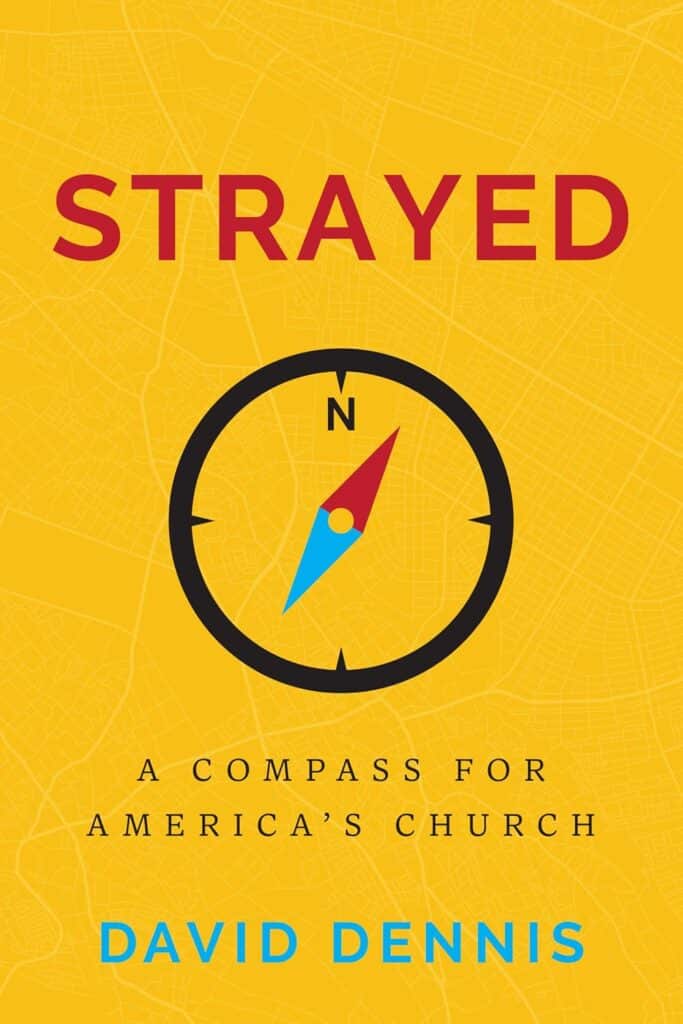
My guest today was there. Rob Thane Smith was in the final phase of officially joining the team of elders at Mars Hill during that period. And in his new book, Four and Twenty Blackbirds: The Trial of Paul Petry, The Beginning of the End of Mars Hill Church, he tells the story from inside the room.
And what makes Rob’s story so important is that this isn’t simply a story about what Mark Driscoll did. It’s a story about what other leaders didn’t do. It’s about fear, group pressure, loyalty, conscience, and the terrible consequences that can follow when leaders surrender their responsibility to one dominant personality.
And I want those of us that care about healthy churches to wrestle with an uncomfortable possibility. Maybe the greatest danger to a church isn’t simply a leader that wants too much authority. Maybe it’s a group of leaders that are unwilling to tell him no.
So join me as I welcome Rob Thane Smith. Rob, welcome to the Restore Report.
Rob Thane Smith: Thank you so much, Lance.
Lance Ford: Well, I’ve been looking forward to this conversation with you because I do believe it’s pertinent. I don’t believe it’s just historic and, quote, interesting. I believe that there’s a lot of lessons that you cover in your new book and through your experience.
And I believe especially in the day that we’re living in that there’s been so many, as you know, so many pastors and leaders that have been exposed for a lot of the same type of behavior that Mark Driscoll demonstrated—and has actually demonstrated since then.
And if the reports from his newest church in the Phoenix area are to be believed, these practices and these ways and MOs of dominating leadership are very prevalent in the prevailing model of the church today.
And we’ve heard story after story similar to what you convey that happened at Mars Hill regarding elders that did have that failure of nerve, as Friedman put it.
Let’s talk a little bit about your experience at Mars Hill, and then let’s get into the depth of it. But take us back to Mars Hill in 2007. What was changing structurally in the church, and why did it matter so much?
Rob Thane Smith: So let me take you back to 2002.
Lance Ford: Okay.
Rob Thane Smith: And perhaps even into the ’90s.
In the ’90s, I was shunned by a fairly small church. And the resulting shunning meant that family members were shunning our family—cousins, brothers-in-law—without due process, without actually being specific about why I was being shunned.
And so it gave me a very strong interest in biblical justice and due process, and the need for it—the need to hear all sides of the story before judgment is made.
And secondly, it also made me want to be in an environment where there was a plurality of elders and not one or two key influential men and no one else.
And so in 2002, when we were encouraged to go and listen to Mark Driscoll—and the reason being was because I found myself being sort of in the broader Reformed camp, but not being cessationist—and so Mars Hill presented themselves sort of theologically in that space.
And so I felt like, let me go and listen.
Mark’s preaching was amazing. And I got to know him. And the first thing I asked him when he came to our home—and it’s in the book—is, “Tell me about your leadership. We’re not coming to a church if there’s not a solid plurality of elders.”
And Mark said to me with great confidence, “We believe in a plurality of elders. The elders can fire me by majority vote. And we’re a safe church.”
And so that’s sort of where it all started.
And Mark would frequently—I would say at least monthly, maybe even bimonthly—mention that from the pulpit. “I’m accountable to other men. They can fire me. I’m not that special,” in a way. He wouldn’t say that, but he was implying.
Lance Ford: Yeah, there’s recordings of that that still exist where he says the exact thing that we would want, that I believe in, that I’ve written on for 17, 18 years.
Rob Thane Smith: And what’s interesting, even after the bylaws were changed, he kept saying that for a period of time. I think he was trying to comfort a church that was, you know, struggling with the changes.
And he continued to say it. He continued to imply that he was a man under accountability.
And so, you know, as the story goes, I eventually joined into the sort of training program that Mars Hill had. And it’s really, you know, when you look back, it’s sort of quite amusing. The rigor that was put around how you qualified to be an elder was substantial.
You know, you’re going to have numerous books, test of character, test of biblical knowledge, blah, blah, blah, implying at the end of the day you’re going to have some amazing man capable of standing firm.
And so, you know, a good portion of the book is just looking at the reality that these were amazing men. I respect every one of them. They were men with good reputations. They were men that knew the Scriptures. They were men that loved Christ. They wanted to see the church be a safe church.
And yet an entire body of men, 24 of them, all capitulated at the one time that we needed them to be men of courage.
And so that’s really the book, beyond the criticism of Mark Driscoll. In fact, you’ll find that I praise him for surrounding himself with those kind of men.
You know, you want to surround yourself with men that can tell you, “This is not good for you. You can’t do it.”
And that’s sort of the Acts 29 model too.
And I’d often sort of joke with Acts 29 leaders that I knew. And that is that they qualify the primary elder over a weekend, and then they take about five years to find the other men because they set such a high bar.
Supposedly, you know, I truly think they’re trying to find men that might qualify that won’t question them because they’re all youngsters. And we’re not encouraged to put men in leadership when they’re young.
I’ve gone to some Acts 29 churches with 200 or 300 people full of gray hair, and the young 28-year-old pastor is still saying he’s looking for elders.
Lance Ford: Yeah. Yeah, I know. I think that point should not be missed that you’re making here, Rob, because this is something I totally believe.
So often you see these churches and church plants that spring up quickly, and you look at the staff, you look at the, quote, senior guy, and quite often the guy’s barely even shaving yet.
And like you said, in the crowd or amongst the congregation, there are capable elders there. You can look at the gray heads and the bald heads and see that there’s years of wisdom that’s dormant and not being used.
And so that’s something very frequent today.
Rob Thane Smith: Yeah. Some of the young men, especially post-Mars Hill when the churches had been scattered—and so the men knew me and some of them were my friends—and they were struggling to find elders.
I said, “Look, give me 10 minutes. I’ll find you a board of elders that can hold you accountable.”
You know, it’s just not that hard.
I mean, Paul tells Timothy, you know, go to all these churches one by one and appoint elders. There’s no three-year runway or 12-month runway with, you know, deep, deep theological thought and insight.
It’s picking the mature guys in the churches who sort of run the race.
Lance Ford: Yeah.
Rob Thane Smith: And now you’re either an elder or you’re not. I mean, so if you are, you are.
And that’s why in 2014, when I finally did speak up, there was some gravitas there because even though I was never an elder, I had a position of respect at Mars Hill because of my ministry outside of Mars Hill, but Mars Hill was very engaged in it.
And I was one of the older guys in the church that loved Christ and had an intact family. So, you know, you get elders, and then you get guys that just are elders because they just happen to be older and wise and people want to hear from them.
Lance Ford: Yeah.
Rob Thane Smith: So I think there’s been a flaw within Acts 29, and I’m not that familiar with them now. They might’ve changed that.
But, you know, to use a sort of leadership psychology test to pick leaders, and then tell them to build a board of elders, and they do it very, very slowly and reluctantly, has been one of their weaknesses in what they’ve created.
Although I think post-Mars Hill’s collapse, it’s probably been better, because up until 2014, they all wanted to be like Mark Driscoll.
And one of the reasons I did speak up—and I don’t mention this much in the book—but, you know, my ministry is all over Africa, and I’d come across young African leaders wanting to be like Mark Driscoll.
You’ll see, I mean, his influence was worldwide.
And so I was seeing young men groomed to become abusive pastors.
Lance Ford: Yeah.
Rob Thane Smith: So that’s when I decided to speak up in 2014, which the book is not about, but I was very engaged in 2014. Just beating the drumbeat: These stories need to be heard. This is not a safe environment. Mark needs to repent.
I never wanted him to step down. I wanted him to repent.
Lance Ford: Correct.
Rob Thane Smith: Correct his behavior and hopefully stay in the pulpit. I mean, he’s an amazingly gifted speaker. He’s very Christ-centered. A lot of people have come to Christ.
I think the overall narrative of The Rise and Fall is not accurate, even though it was a fantastic series. And I’ve talked with Mike Cosper about it, but I think it landed in the wrong place in terms of looking back and saying, “What went wrong?”
What went wrong was men failed to hold leadership accountable.
And it’ll happen in a Reformed church. It’ll happen in an Arminian church. You know, you can’t have a tyrant be at the top, a gifted tyrant, without him being tethered by mature men.
Lance Ford: Yeah. Well, there’s an old adage—and I use it a lot here on this channel—that every system’s perfectly designed to produce the results it does.
And so, I mean, it would be a miracle if these results didn’t come out of these types of systems. It’s going to happen.
And if you don’t have true peer-to-peer accountability—and, you know, I’ve always chuckled with amazement at the adage that said, “A plurality of leaders with the chief among equals,” right?
And I think I’ve heard Mark Driscoll use that, which is just nonsense.
Rob Thane Smith: So the second part of that statement cancels out the first part. It’s a ridiculous statement.
Lance Ford: It is. It is.
Rob Thane Smith: And also, I mean, you know, the other one that tricks everybody is the vision pastor.
You see, we’re all equal, but poor me, God gave me the vision. Poor humble me.
Lance Ford: Yeah.
Rob Thane Smith: Now we’ve all got to listen to that vision. It’s not my fault God gave me the vision, but I’m the vision pastor.
Lance Ford: Yep.
Rob Thane Smith: And you’ve got churches like Steven Furtick’s where you don’t become a member unless you agree to support the vision of the vision pastor.
Lance Ford: Right.
Rob Thane Smith: And so it’s just another form of gaining control, you know, gaining control.
Lance Ford: Yeah. And that whole visionary piece, it came out of the world. It came out of Gentile management systems.
The whole visionary piece came out of the 1970s, 1980s and got imported into the whole leadership industrial complex within the church.
And so then we had this position of visionary, which you don’t see anything—there’s nothing, not even a sniff of that in the New Testament—that there’s one person that has a vision of the local church.
Jesus already gave us the vision of the local church.
Rob Thane Smith: Exactly.
I remember having an interesting discussion. The last church I was part of the board of, when they were saying, you know, “Let’s renew our annual mission statement.”
Like, we don’t need to renew a mission statement and come up with a new one every year.
Lance Ford: Yeah. Did it expire?
Rob Thane Smith: Yeah.
Lance Ford: Amen. I totally agree. I totally agree with you, Rob.
And this is the stuff that’s come in. But once again, this all builds the edifice of the solo heroic leader, right? And that’s what we get today.
So I want to ask you, how did a church with that many elders—24, which I don’t know how you could even agree where to order lunch with 24. But that’s a whole other topic. I think that’s way too many, but that’s another topic.
But how did a church with that many elders still end up concentrating so much authority in one man?
Rob Thane Smith: Well, and that’s really, you know, I think folks need to get into the book to see how it was done. It was done very manipulatively.
The firing and the trying of Paul Petry and the just abusive way he was treated played a role.
You know, many of the elders were young. Like Jeff Bettger, you know, he’s probably less than 30, maybe in his early 30s.
You know, many of them—or some of them—were busboys before they became elders. So now they’re earning, you know, $110,000, $120,000 a year in Seattle, getting a book allowance, being flown around by wealthy donors that believe in Mark Driscoll’s ministry to vineyards in California to have the elders meeting.
It was a very heady thing to be an elder at Mars Hill Church, you know.
And I’m so glad that I was spared that. And I was spared that not because I was rejected. I was spared that because of the way that they chose elders.
You had to throw your hat in the ring, and I wasn’t prepared to throw my hat in the ring. If someone wants to throw my hat in the ring, that’s one thing. But for me to initiate the process is a little arrogant.
You know, none of us qualify.
Lance Ford: So let’s clarify that, Rob.
So what you’re saying there is, to become an elder at Mars Hill, basically you nominated yourself. You basically raised your hand. That started the process.
Wow.
Rob Thane Smith: Yeah.
And I was under sort of a, I think, a misinterpretation of the verse that says, you know, “If a man aspires to be an elder, he aspires to a noble task.”
And so you were saying that, “I feel called to be an elder.”
And I’m not sure that that’s anywhere in Scripture, being called to be an elder. Elders are appointed.
You know, you can be called to this or called to that, but elders are appointed, and it’s based on character and the need for accountability.
You know, I’d rather have 10 men of lesser character than no men at all, because we all have lesser character.
You know, in my chapter about Mark Driscoll trying to nail me afterwards, he said something quite profound. He says, “Rob, I know things about you that’ll destroy your ministry.”
I said, “Mark, you don’t know the half of it. What you know is far better than what I am.”
I mean, we are all sinners. We have all failed.
“Why do you call me good?” Jesus said.
And so the whole process there started on the wrong foot.
It’s guys saying, “I actually qualify to be an elder. I’m a blameless man.”
So you’ve got this 28-year-old guy, newly married or maybe got one kid, going to Mark and saying, “God’s calling me an elder.”
And he’s essentially saying, “I’m blameless.”
You know, I couldn’t do that.
And I finally sort of yielded when I was asked to be an elder, when the church was expanding so much. They did need leadership.
And so I reluctantly, in many ways, said, “Okay, I will go through the process.”
And so I went through the process and was a week away from being installed as an elder when this whole firing of Paul Petry and the trials came up.
And, you know, I think that I—and I say this humbly—I acted like an elder.
I said to the elders, “You can’t do this. You’ve got to have a fair trial. You’ve got to have a biblical trial. If you don’t do this biblically, you’re going to have a verdict that stinks.”
And that verdict, you know, if a verdict isn’t trusted, it never goes away. And injustice just sticks around like a wound that never heals.
Lance Ford: Yeah.
Rob Thane Smith: And in my email, I said to them, “This will cause a shadow that will never go away.”
And it proved to be somewhat prophetic.
Lance Ford: Certainly did.
Now, the famous clip that everybody’s heard many times, where the whole “bodies under the bus” clip, right?
Mark Driscoll: Here’s what I’ve learned. You cast vision for your mission. And if people don’t sign up, you move on. You move on.
There are people that are going to die in the wilderness, and there are people that are going to take the hill. That’s just how it is.
Too many guys waste too much time trying to move stiff-necked, stubborn, obstinate people.
I am all about blessed subtraction.
There is a pile of dead bodies behind the Mars Hill bus, and by God’s grace, it’ll be a mountain by the time we’re done.
You either get on the bus or you get run over by the bus. Those are the options. But the bus ain’t going to stop.
And I’m just a guy who is like, look, we love you, but this is what we’re doing.
There’s a few kinds of people. There’s people who get in the way of the bus. They’ve got to get run over.
There are people who want to take turns driving the bus. They’ve got to get thrown off because they want to go somewhere else.
There are people who will be on the bus—leaders and helpers and servants. They’re awesome.
There’s also just sometimes nice people who sit on the bus and shut up. They’re not helping or hurting. Just let them ride along.
You know what I’m saying?
But don’t look at the nice people that are just going to sit on the bus and shut their mouth and think, “I need you to lead the mission.” They’re never going to.
At the very most, you’ll give them a job to do and they’ll serve somewhere and help out in a minimal way.
If someone can sit in a place that hasn’t been on mission for a really long time, they are by definition not a leader. And so they’re never going to lead.
You need to gather a whole new core.
I’ll tell you guys what too. You don’t do this just from your church planting or replanting. I’m doing it right now. I’m doing it right now.
We just took certain guys and rearranged the seats on the bus. Yesterday we fired two elders for the first time in the history of Mars Hill.
Last night, they’re off the bus, under the bus. They were off mission, so now they’re unemployed.
I mean, this will be the defining issue as to whether or not you succeed or fail.
I’ve read enough of the New Testament to know that occasionally Paul puts somebody in the wood chipper.
Lance Ford: That statement was made, from what I understand, really the following day after the firing of Paul Petry and Bent Meyer, correct?
Rob Thane Smith: Yeah. And, you know, I was in the sermon the day they got fired. I didn’t know that they got fired until the next day when I came to church.
And my wife—you know, people were coming out after evening counseling sessions and that—and a young man I knew was in tears. And that’s where I heard that Paul had been fired.
Lance Ford: Yeah. Those guys were really loved. They were really loved by the body there, weren’t they?
Rob Thane Smith: Absolutely. Absolutely. Absolutely.
You know, and within weeks, this loved family—especially Paul Petry in terms of his broader family. All his kids were there. They were in the youth group. They were more integrated into the church than Bent Meyer, who’s a beloved man, a lovely man, and his wife.
But the Petry family, the entire family—he had seven or eight kids.
And so within weeks, they’d all been shunned as if they’d done some grave, dastardly thing that deserved them to be treated as if they didn’t exist.
I mean, shunning is one of the most evil things on earth if it is unjust.
And every shunning that I’ve come across, Lance, to be honest with you—and I’ve studied this because of what happened to me and my family—it’s been trivial things. It’s been hilariously trivial things.
And yet the harshest Christians shunning other Christians is one of the harshest things to do. And yet it’s just done so glibly, as if this is somehow honoring to the Lord.
It is evil.
Lance Ford: Yeah. And most of the time it’s done under orders. So the congregation, they don’t even know the facts. They don’t even know why they are shunning their former brothers—you know, the people that are their brothers and sisters—but they’re treating them like outcasts.
So let’s, for everybody—there’s going to be people that view this or listen to this podcast that are not totally up to speed on the whole Mars Hill story.
So just explain what it was that Paul Petry and Bent Meyer were—and for people to understand, they were elders and they were paid staff members at Mars Hill. So they weren’t just jettisoned from the board. They lost their livelihood.
So what was it that Mark Driscoll was accusing them of?
Rob Thane Smith: So, and let me say this in the context of church being probably the most dynamic and enjoyable church that me and my family had ever been to.
All right?
And life for the average member—it’s exciting. It’s just moving forward.
We are noticing a slight shift in Mark’s preaching. It’s becoming more eisegesis. You know, he’s reading himself more into the Scripture.
We’re going through Jeremiah—or Nehemiah—and Mark is the rebuilder of the wall, you see? And we’re seeing things we hadn’t seen before.
And then, unbeknownst to the church—because even when we became members, no one showed us the bylaws. You know, it just wasn’t, “Here’s the bylaws, agree to them.” It was just, “Come and be a member of our church, and here’s what membership looks like.”
Unbeknownst to us, Mark Driscoll a year earlier had tried to change the bylaws where he consolidated authority amongst a few men.
It failed.
It failed because Paul Petry, in many ways, challenged—and Bent Meyer challenged—the structure that was being proposed as being opposite to what we’d always been taught.
So they kept proposing having delegated authority to a few men, but the ultimate authority was vested in the elders.
So you didn’t have to choose what to have for lunch tomorrow. You delegate that. Everyone eats what comes. No one can complain because they delegated that authority to a committee, you see?
And so they created executive elders—eight, you see—but the eight were accountable to the rest of the elders.
What we didn’t know in 2007 was that Jamie Munson, who was the lead pastor, came in and said, “We’ve got new bylaws that we’re proposing, and we don’t want to have discussion on it. You can email us any objections you have, and then we’re going to have an up-and-down vote.”
You see?
And what that was—the executive elders then had the choosing of the executive elders, and the way you fired an executive elder structured in such a way that only Mark Driscoll, at the end of the day, could appoint them or get rid of them.
It was just mathematically impossible, the way that they had these little formulas.
And so, once again, if you read what Paul and Bent objected to, they did it in the most gracious, kind, loving way.
They objected and argued for the ultimate authority still to stay in the hands of the 24 elders.
So they objected.
The charge—and I think that they came up with the charge just to justify the firing—they both got fired.
Lance Ford: Let me ask you before you get to the charge, Rob.
So when they objected, was this verbal or written? Was it in the meeting?
Rob Thane Smith: It was written. It was written, sent only to Jamie. It wasn’t sent to all the elders.
I mean, can you imagine changing the bylaws of any organization and not going in and having thorough discussions about it?
Lance Ford: Yeah. This is not like changing a sign in the lobby somewhere. This is serious stuff that you’re proposing to change.
I mean, it should have taken months of deliberation.
Rob Thane Smith: And they wanted no deliberation.
And I think they were just testing to see who was going to be the guys who would fight, you see?
Lance Ford: Yeah.
Rob Thane Smith: And of course, there was deliberation just going on casually.
And I will tell you, up until the trial, there were enough men on Paul’s side to keep the bylaws as they were.
There were enough men who could have reinstated Paul as an employee.
They couldn’t, without a trial, take his eldership away because the bylaws didn’t allow that.
The new bylaws did allow that, but the old bylaws—you were an elder, and the only way you lost your eldership was to be accused of sin and have a trial, you see?
So Mark Driscoll very cleverly said, “Well, there’s two sort of categories. We’re a civil organization where we’ve got employees, and then we’re a spiritual organization with elders.”
So, “You two are fired.”
Didn’t give a reason. Just said, “You’re fired. It terminates now, and we’d like you to resign as elders. But if you refuse to resign, we’re going to put you through a painful trial.”
Both men immediately said, “Put us through a painful trial.”
You see?
And they didn’t tell the church what the charges were.
And one of my appeals to the elders the night before the trial—Paul and I became quick friends. We were not really close friends prior to this, but we became quick friends because I had a strong interest in due process and in doing this properly.
And I reached out to him immediately when he got fired.
And, you know, the man’s entire career had been destroyed. He’d parked his law practice, which he’d built up himself. He wasn’t a partner in a big law practice.
And so he was now having to rebuild from scratch. Probably got 90 days of severance pay.
His life was financially destroyed. His kids were in shock. The wife was in shock. Wondered, did Dad do something? Did he not do something?
The church is in shock because we didn’t know what the charges were, you see?
And the church does what all these guys do—it’s not just Mars Hill Church. The tiniest little Assemblies of God church that decides to shun someone that they think is troublesome, to the largest Roman Catholic church that decides to shun them.
This is what they say: “Trust us.”
Lance Ford: Yeah.
Rob Thane Smith: “Trust us. You don’t know things we know. Just trust your elders. You picked us. God’s given us authority. Just trust us.”
But what does that mean? That means that nobody knows what went on, you see?
And what I loved about what you wrote—and I encourage the listeners to go to your work on church discipline—it’s an open process. It involves the whole church. Everybody knows the facts. Everybody knows what was wrong.
You know, there’s due process. There’s openness.
Lance Ford: Yeah.
Rob Thane Smith: So that people can make a sound judgment.
And if the Mars Hill congregation had fully known what the crime was, they would laugh at the idea of shunning Paul Petry.
Lance Ford: Yeah.
Rob Thane Smith: But it was just nonsense.
They ended up charging him with two things primarily: showing a disrespect to spiritual authority.
Lance Ford: Okay. Okay, let’s stop right there. Let’s stop right there on number one. Let’s take these one at a time, Rob.
I know you’re going to ask me something.
Rob Thane Smith: Go ahead. I know what you’re going to ask.
Lance Ford: So, showing disrespect to spiritual authority.
But hold on here. We are both elders, right? Mark Driscoll, you’re supposed to be a peer. We’re plural here.
So you’re saying that I’m showing disrespect to you, but this is mutual accountability, right?
I mean, what am I—Rob, help me here. What am I missing, bro?
Rob Thane Smith: You just hit the nail on the head.
There was no spiritual authority over those men. They were the spiritual authority.
One elder had as much spiritual authority as another elder. There was no hierarchy amongst the elders.
There was no defined protocol that said he couldn’t do what he did, because the second charge was linked to the first charge: “You violated elder protocol.”
The elder protocol was that he discussed the bylaws with someone who was not on the board of elders.
And that was me.
And so I was dragged into this thing because Paul came to me saying, “I know you have an interest in church discipline.”
And I had objected—and the story’s in the book—I objected sometime earlier to two elders wanting to throw a young man out of church without any due process.
And I said, “How can two elders just throw someone out of the church? That’s excommunication.”
They said, “Well, the bylaws allow them to.”
I said, “Well, then we need to change our bylaws, goodness sakes. How can two elders just arbitrarily be the accuser, prosecutor, and jury on such a weighty matter?”
You see?
So Paul heard that.
And so he actually wrote a proposed change to the bylaws in that area. And so he was actually encouraging change. He wasn’t against change. He was against changing the structure.
But he proposed a change there that I actually wrote for him. And he proposed my words, you see?
They charged him with violating elder protocol by talking to a member.
That member was Rob Smith.
Now, in any kind of reasonable church trial, had that actually been a crime worth prosecuting, any defense attorney would say, “This wasn’t just a lowly member. This is a guy who’d just gone through a year’s worth of training. He was already a deacon, and he’d gone through a year’s worth of training, and next week he’s going to be an elder. Give the guy a pass.”
You see?
But that wasn’t how it came across.
“How on earth could you stoop so low as to talk about the changed bylaws to a member?” as if that was some crime.
The whole church should have known the bylaws were going to be changed.
Lance Ford: Amen.
You know, I couldn’t say amen enough on that, Rob, because this is once again where we have to understand that the church is a body. It’s not a business.
So it’s a functional body. Jesus is the head. And all the information from the head disseminates down and informs the rest of the body, right?
So that’s the problem with this type of secrecy.
And I would say to our folks that are joining us in this conversation, whether you’re a church member or whether you’re a staff member or you’re a board member or an elder, secrecy within these type of conversations should never be.
Why are you wanting to keep it secret? Why do you want to keep these things secret?
Well, Jesus said that men love darkness rather than light because the deeds that they do, they do in secret, right?
So these are deeds that you want to keep held back. So there should be openness, folks. And this shouldn’t even be a question.
But I see your point then also, Rob, is that, okay, let’s say these are the rules. They were the rules at the time.
But talk about a crazy technicality that they’re trying to hang Paul Petry on. It’s ludicrous, which really does owe to the fact that there is deviant intent behind all this.
Rob Thane Smith: Well, look, deviant intent aside—and I agree with you—but 24 highly qualified men, all watching this, all processing it, all praying before the Lord to help them to be just.
And 24 men know in their heart that Paul is innocent, know in their heart that the way that this is happening is manipulative and controlling.
And they all unanimously fail to stand up and say, “We cannot do this to our brother.”
And not only that—and this is why I picked Four and Twenty Blackbirds. A lot of Americans don’t know the British rhyme, but, you know, the blackbirds only began to sing when the pie opened.
Seven years.
And none of these guys said, “You know, what we did was wrong.”
Only when they became abused themselves did they start to say something’s wrong.
And these were highly qualified men. They were men I love. I respect them. Some of them are still my friends, you see?
And so it’s a warning to leaders.
This is not saying Mark was terrible. This is saying we can all fail.
So let’s learn. Let’s learn to be men of courage and leaders of courage and women of courage.
You know, there comes a time when you see injustice and you have to say, “We need to be just.”
You know, do justly, love mercy, and walk humbly.
These men couldn’t speak up for seven years.
They knew the impact this had on Paul Petry. It is highly documented.
They knew Paul Petry had never been exonerated.
One of my pleas to even them in 2014, as the whole church was crumbling, I said, “Would you please exonerate Paul Petry?”
Even then, it never happened.
They did apologize. It was sort of done informally.
But why on earth did Mars Hill leadership, after Mark Driscoll had resigned, not stand up and say, “Seven years ago, we did something we should never have done. Paul Petry, we want to tell you, you’re a man of character. You did not deserve this to happen to you and your family.”
You see?
Lance Ford: So let me ask you, Rob, on that.
We can say whatever we want about Mark Driscoll. There’s lots to say about him.
But Mark Driscoll was allowed to become that by 24 extremely well-qualified men.
So that’s the lesson.
This book needs to be read in seminary by people that are going to be in leadership positions.
Rob Thane Smith: Yeah. It’s a case study.
Lance Ford: It’s definitely a case study there.
So not only did they fail their leaders, they failed one another, but they failed the church. They failed the body. They failed their assignment to the Lord.
And I know you’re not a psychologist, but I’m going to ask you this question: What do you think was happening psychologically and spiritually inside those 24 men?
Rob Thane Smith: Well, certainly fear.
Fear.
I will tell you that it is a fearful thing to have Mark Driscoll angry at you, okay?
I’ve experienced it more than once.
And, you know, there are very few people that will go 15 rounds with him.
I went 15 rounds with him.
I think I’m probably one of the few people that Mark Driscoll, probably deep in his heart, actually does respect, okay?
He didn’t intimidate me.
But I didn’t have anything to lose.
If I’d been getting $120,000 and everyone thinks I’m just the bee’s knees because I’m a Mars Hill elder, would I have capitulated?
I hope not.
But we’re just human beings, you see?
And that’s why we need to be reminded: This is what leadership looks like.
So these men have all got a secure position. They’ve seen the two most beloved men in the church get fired.
And so now, what’s the implication?
“You guys better go along with what we’re proposing or else you’re going to get fired too, because your job is separate to your position as elder.”
You see?
Where did they get that from?
But they put that out there, you know, because they’ve got to fill out some civilian forms, take taxes out and pay FICA and everything else there.
And somehow Mark and Jamie created this sort of dichotomy between the two jobs.
“You see, we can fire you. You’re just a civil employee. Your eldership’s got nothing to do with that.”
Well, the elders could have overridden that in a heartbeat.
Lance Ford: Right.
Rob Thane Smith: “Whatever you think, Mark, you can’t do that.”
But they didn’t do that because they just watched someone that they probably felt was more worthy of being an elder and more loved by the flock than they were just lose his job and face this kangaroo court.
You see?
So there’s that.
There’s also—I appealed, and I won’t name them yet, but I do name them in the book—but I appealed to the guys that I knew well saying, “You guys need to intervene.”
And, you know, the oldest one of all said, “You know, I haven’t been an elder that long.”
He writes books about leadership now, Lance. How to be a good leader.
All right?
It took him seven years to speak up.
Lance Ford: Yeah.
Rob Thane Smith: He made excuses. “You know, I don’t know all the facts.”
You see?
The most Reformed guy, I thought, would really stand up. I mean, this guy’s a giant of a man.
And I thought he’s just going to go there and put his fist on the pulpit like Charles Spurgeon would and say, “Thus saith the Lord. We’re not going to do this.”
You see?
Didn’t say a thing.
These guys just lost the will to be counted and stand alone.
Lance Ford: Yeah, that’s heartbreaking.
Rob Thane Smith: It was really sad.
The closest was Leif Moi.
And I became very good friends with Leif Moi. He was a co-founder.
And Leif said, “Look, Rob, he was guilty.”
So I said, “Why didn’t you object to the charges? The charges should have been thrown out.”
Because, yes, he did talk to a member.
It’s not a violation of any rule. There’s no rule saying you can’t talk to a member.
They just made that up.
You see?
The accusers made it up.
The accusers were the prosecutors. They made it up.
And the prosecutors were the judge.
I mean, talk about injustice.
Even if they were guilty of some crime, you don’t try due process that way. That’s just not justice.
You’ve got to be impartial. Your jury’s got to be impartial. Elders have to be impartial.
That’s a fundamental biblical Christian New Testament principle.
And so these men just lacked something in their long, arduous training and reading—Strauss and biblical leadership and all the other things you’re supposed to read.
And at the end of the day, they all had no courage when it was needed.
I mean, they’re deep lessons to be learned. And I think it’s going to protect other men from becoming the worst of themselves and protect churches if people would learn those lessons.
Lance Ford: Well, let me ask you this, Rob.
Looking back, were there warning signs that you can recall—warning signs that elders and staff members and church members should be able to recognize before a church reaches this point?
Rob Thane Smith: Yeah, you know, you always look back and say, “Okay, now I see them.”
And in the book, I go through these warning signs.
My first interaction with the elders was with Leif Moi, who became a dear friend in the last years of his life. I spent a lot of time with him the last four years of his life. We were very, very close.
But Leif Moi—my daughter was courted by a young man. He was 19. She was 19. And they wanted to get married.
And I gave permission for them to get married.
And so they set a wedding date and went and told Leif Moi, “We’re getting married in six weeks. Will you marry us?”
And Leif Moi said, “No, we won’t marry you. You’re not going to get married. The elders are not going to allow you to get married. You’ve got to go through all these hoops before you get married.”
You see?
So they were a little upset by that and came to me.
And so I ended up going to Leif, and I said, “You don’t have the authority to block their marriage. I’m the dad. They can get married. They can go to the courthouse and get married tomorrow without my permission. But they’ve asked my permission, and I gave permission. You don’t have jurisdiction in this area.”
And look, their motive was that there were so many women without fathers and blah, blah, blah, and they wanted to make sure that they’d gone through all the marriage counseling and testing—which all these now-divorced Mars Hill members and some elders went through themselves.
All right?
So they had good motive.
But they came and told me—Leif told me—that they can’t get married.
And I said, “Well, I’m sorry, Leif. You have no authority. So if you don’t marry them, we’ll go to another church to get married. Our family is full of pastors. We’ll get them married somewhere else. But we’d like them to be married.”
Lance Ford: Yeah, they’re members here.
Rob Thane Smith: They had to convene an elders meeting in order to come back to me and say, “Yes, we’ll marry your daughter.”
You see?
Which didn’t matter to me. I didn’t want to—yes or no—I just told them it’s going to happen.
That’s my zone, not your zone.
You see?
So that was a harbinger of—
Lance Ford: Yeah. Overstretch already. You’re seeing the control and overstretch.
Rob Thane Smith: Absolutely.
Lance Ford: Right.
Rob Thane Smith: And then a few years later, my wife was involved in counseling a woman who my wife approached me and said, “The elders are not handling this woman very fairly. Would I make an appeal to them?”
And this is a whole chapter in the book. I remove her name and the circumstances so that she can’t be identified.
But I wrote to two elders, and they just happened to be Paul and Bent. They just happened to be those two elders, saying that I’m seeing some things that, if we continue to do this, we might become an abusive church.
And I quoted from Enroth’s book, Churches That Abuse. Very good book. Very healing to me and Merle because we’d been abused in a church for seven years.
I mean, we read that book. We were in tears because we found someone identifies with this, the devastating effect of being shunned by your community.
And so I just wrote out and I said, “I want you to consider this case. And here’s the areas, I think, where it’s been abusive, and it’s easy to correct.”
Both those men accepted that. Bent in tears, and made it right.
Well, that document landed up with Mark Driscoll.
And I was on my way to Africa. I was involved in orphan care in Africa very heavily at the time.
And so I was on the way there, heading to the airport that day. And he said, “You need to come see me.”
So I said, “Okay, I’ll leave an hour earlier and, on the way to the airport, come see you.”
And I came to see him, and he said that he got through the first half page and he said, “I was so angry I couldn’t read anymore. How dare you? How dare you insert yourself?”
You see?
And I said, “Mark, if you only read the first half page, you didn’t read my thesis.”
You see?
And he didn’t want any lip back.
And I had one of the elders there. Bent was there, and Bent just kept very quiet.
And I challenged him after. I said, “How could you allow Mark to talk to me like that without intervening?”
And he just said, “Rob, it’s not the right time.”
But he just tore strips off me for what he called inserting myself.
And his—what he said was, “We’ve been so kind to you and your ministry,” which was true.
We were the only ministry displayed at Mars Hill. Mars Hill was very proprietary. It was Mars Hill or nothing.
But they allowed us, because it was orphan care. We started when the church was younger. And they gave us an enormous amount of exposure.
And I’m grateful for that.
So Mark was saying, “We’ve been so good to you. So who do you think you are, after being so good to you, to intervene?”
So I said, “Mark, read the thesis. Read it.”
You know?
But I was abused by Mark then.
And I sort of just did a—just like some of those funny skits where you see the servant say, “Yes, yeah, yeah. Good soldier.”
I walked out backwards, sort of just not wanting to upset.
And he said something there that I heard many times after this.
He said, “Rob, you’re pissing me off.”
And that became sort of the code word at Mars Hill to shut up. You’ve crossed the line now. Shut up and comply.
So I just left, and I didn’t talk to Mark for 18 months.
But that—if you put that document I wrote in the book as one of the appendices—that was written in 2005, because 2007 was when the bylaws changed.
It was predicting what Mars Hill became, sadly.
Lance Ford: Wow.
Rob Thane Smith: And so there were those instances in my engagement with Mark where he was very abusive.
And then the phone call I had—the chapter is “The Worst Phone Call of My Life.”
You would not believe that the man on the other end was a pastor.
I mean, it was just what I heard from out of his mouth and what he threatened me with was just—I would say to Mark, I said, “Listen to yourself. Imagine if I were talking to you like that and I was your pastor.”
And then he started crying and apologizing.
And then two minutes later, he’s back with Dr. Jekyll or Mr. Hyde.
Lance Ford: Man, I have been on the other end of those phone calls like that too, Rob, with pastors that the congregation has no clue, would never dream the things that are coming out of these guys’ mouths.
And they would fight you. When you say, “No, I was there. I experienced it,” they’d call you a flat-out liar.
They could not believe.
But I’ve been on multiple of those type of calls.
Rob Thane Smith: Yes.
So I know.
What you did not do at Mars Hill is cross Mark. Mark got his way, you see?
And so Mark called me up—and this was post the trial—and this was my crime.
I said, “The elders said they prayed and fasted for 24 hours prior to the trial.”
And so I said, “You could fast for 30 days and 30 nights. It still won’t make an unfair trial fair.”
You see?
That was my crime.
I was put under discipline for making that statement.
You see?
Mark Driscoll calls me at seven in the morning, says, “Clear your calendar. Me and the elders are coming to your house for tea at 10 o’clock.”
I said, “Mark, you’re not coming to my house at 10. I’ve got plans. I’ll come and see you one-on-one, el mano a mano, next week, anytime you want. But you’re not coming to my house.”
“I’m your pastor. I’m your authority. We’ll come into your house at 10.”
I said, “Mark, you didn’t hear me. You’re not coming to my house at 10. I have plans.”
Ninety minutes of abuse.
“I will destroy you, Rob. Blankety, blankety, blankety, blank.”
The foulest language.
“I will destroy your ministry. I will make sure you can never be in ministry again. I know things about you that no one else knows.”
You know?
And that’s when I said, “Mark, I know worse. I’ll destroy you? Mark, you’re a Calvinist. I’m a Calvinist. You can’t destroy me without it being in God’s hand.”
I mean, I just took the power away from him.
And then I would say, “Listen to yourself. Listen to yourself.”
And then he would emotionally get all emotional to try and get me to change my mind.
You see?
Very manipulative, very clever, very articulate man.
And I just gave it straight back to him, just saying, “No, you’re not going to get your way with this. We will do this properly. You have beef with me. Meet me one-on-one in your office.”
You see?
And he was furious.
He just tried every which way to get me to capitulate.
And I didn’t.
But boy, that was the worst conversation that I’ve ever had with anybody.
And I’ve hired prisoners in my business the last 20 years. And I’ve had some pretty foul guys in my face.
Nothing like Mark Driscoll trying to get me just simply to let him have his own way.
You don’t tell Mark you’re not going to do it this way, you know?
Lance Ford: Yeah.
Rob Thane Smith: Now, having said that, he’s in the ministry and he’s got a church of 5,000. The people are coming to the Lord.
You know, he’s not a fool.
I hope he’s learned some lessons.
You know, I’m not anti-Mark.
What I am is saying, get accountability.
And if you are one of those men or women that need to hold someone to account, have courage at the right time.
Lance Ford: Yeah. I think that I agree with that.
My feeling on Mark and his ministry today and the people that defend him and say, you know, “Hey, this was a dozen years ago or however long ago, and, quote, Mark has repented, yada, yada, yada.”
If Mark—here’s just my, my father-in-law always told me everybody is entitled to their own stupid opinion.
Okay?
So here’s my own stupid opinion about this, is that if Mark Driscoll has truly repented of his abusive ways, and like the example of what he did with you and definitely what he did with Paul Petry and Bent Meyer, if he truly had repented of that, he could have such an impact on young pastors today and on young leaders today to stand up and say, “Here is what I did.”
Don’t call it a mistake. Call it sin. Call it control. Call it what it is.
But say, “Here’s what I’ve learned. Here’s what I did. And here’s the things that were antithetical to the spirit of Jesus, to the character of Jesus, and to the New Testament text.”
He could have such a great impact upon young pastors and young leaders today if he truly repented and he took that into lessons today for the rest of the body to learn.
Rob Thane Smith: Yeah, I agree with you.
And the sad reality is that he not only never repented, he doesn’t even see the need to repent.
And in some ways, I have some sense of sadness because if, as the broad majority of his loudest critics say, he’s a narcissist, then he’s going to create a narrative he can live with.
And that narrative doesn’t have him as the perpetrator. It has him as the victim.
You see?
The latest narrative now is that somehow the computers were hacked, and so he was protecting a woman that had been raped.
That’s why—you know, I mean, that’s just ludicrous.
There’s no proof of it at all. There’s no due process.
And I’m a big due process guy, okay?
If you have a statement like that to make, all right, a trap was set.
Okay, Mark, who set the trap?
Lance Ford: Yeah.
Rob Thane Smith: Who told you that? Who were the men at Panera Bread that said that?
You see?
Lance Ford: Yeah. And this has been the pattern.
This has been the pattern, for folks that don’t know.
The pattern is that Mark always becomes the victim.
He was the victim when he left Mars Hill, and what Rob’s referring to there, he said God told him a trap has been set.
He was the victim.
Then, you know, there’s helicopters flying over his house. His children are afraid. The whole family’s afraid for their safety and all this.
And so Mark never mentions the people that he victimized. That never comes up in this narrative. It’s always about him.
Rob Thane Smith: Even his opening act in this whole saga after the trial was, “These men are trying to take authority in the church. They’re trying to take over the church.”
Well, no, they already had authority in the church. There was no takeover. They were just saying, “Leave it as it was.”
But the narrative is these men were trying to take over the church.
You see?
But he has to do that.
If he is a narcissist—I don’t know. I’m not a qualified expert—but if he is, we’re not going to see repentance.
Okay?
If someone has narcissistic personality disorder, they do not repent of something they cannot see, you see?
Lance Ford: Yeah.
Rob Thane Smith: And so that actually allows me to be content with the fact that he’s not going to repent, because he’s created a narrative that he can look himself in the mirror in the morning and say, “I’m okay.”
Lance Ford: Yeah.
It reminds me of—there’s a scene in Seinfeld where George Costanza tells Jerry, “If you believe it, it’s not a lie.”
And that’s like his whole operating system. That’s George.
And, you know, that’s what happens in narcissism. It’s like, I think they really believe this.
You know, they create these narratives because they just can’t see because of the lack of empathy so often.
Well, always in a true NPD person, they just—it’s all about them. And so they have no empathy for others.
Rob Thane Smith: Yeah.
And for years—and I can tell you that Leif Moi was this on steroids—for years, the expectation was that Mark would come back and just say, “You know, I’ve reviewed everything, and what I did was wrong. And I want to restore Paul Petry and Bent Meyer.”
And there were opportunities, even 2014.
-
Now, you know, Mark’s got a lot of pressure on him. The church is starting to struggle.
Paul Petry—his daughter has a terrible accident on a bicycle. We wonder if she’s going to make it. We wonder if she’s going to be paralyzed.
And I just thought, you know, if Mark had any sense at all, if he wanted to win this battle, which he was losing, right—he was losing it just because ordinary guys like me were just standing up and talking—he should show up.
Because we had a fund to help her. You know, we started a GoFundMe to help her with the medical expenses.
Imagine if prominently on that fund there’s a $25,000 check from Mark Driscoll.
You don’t think that would change the narrative?
You see?
And so I kept thinking. I kept imagining ways that Mark could just come in and restore himself to the Seattle community.
Okay?
He hurt Seattle. He kept saying, “I love Seattle. I’ll never leave Seattle. God’s called me to Seattle.”
He harmed Seattle.
By what he did, he harmed Seattle.
He harmed so many people whose faith was shattered because they trusted him more than they should have.
And I agree with you. What an amazing opportunity for him to come back and say, “What I did was wrong. I want to make it right. And I will tell you how it’s made right.”
And I begged Wilkerson, who led the letter of repentance of 19 of the elders to Paul Petry—we talked behind the scenes—and I said, “You guys, you need to compensate him. You need to go back to the church members and say, ‘We as a church harmed Paul Petry. We ruined his career.’”
And they actually talked about that, but they never did it.
Lance Ford: Right.
Rob Thane Smith: The way that you restore Paul Petry and Bent Meyer is to come in and tell them that they were not disqualified as elders.
And, by the way, here’s a $500,000 check for the last 10 years of how we destroyed your life—whatever it is, $30,000.
James MacDonald tried to do that, but he did it too late because when he saw the foundations crack in 2014, he resigned, ran back to his church, and immediately reinstated elders that he had done the same thing to.
And I would, if I was a betting man, I would say that some compensation changed hands.
I may be wrong, but I bet you that it did.
He tried to make it right because in their heart, they know how to make it right, you know?
So, yeah.
But anyway, it’s not about Mark. It’s about 24 men that failed to sing until it was too late.
Lance Ford: Well, and on that note, because that really is the point of your book, and I think that is why this is an important lesson to pay strong attention to.
So for an elder or a board member watching or listening to this that realizes, “Hey, our church is becoming overly dependent upon one powerful leader,” Rob, what do you think they should do now before they become another group of good people that fail to speak?
Rob Thane Smith: That’s a good question because leaders are good at what they do.
You know, I was privy to some of the inside leadership down at Saddleback.
And what you had was a very kind guy who had his own way, you know?
So you had a kind benefactor rather than a mean benefactor.
And so what do you do?
I mean, I think what you do is you speak up when you see injustice. You speak up when you see abuse. You know, you speak up.
You know, having one leader that is at the forefront, I don’t know that that’s necessarily unbiblical. Paul was. I mean, I’m sure Timothy was.
But you need to be able to help hold that man to his account.
I would, even with that leader, meet them one-on-one and just say, “You know, I love being part of this. This is exciting. And you’re aware of what can happen if we don’t continue to play our role. And so I just want you to know, I’m one of those guys that are going to play a role in your life that might say no when you want to hear yes.”
Lance Ford: Yeah.
Rob Thane Smith: And that might say, “You can’t say that from the pulpit,” when you try to be relevant or trivial and you’ve crossed the line—which Mark often did and did get rebuked and would correct himself.
Before 2007, Mark was correctable, and it made it a safe church.
Lance Ford: Yeah.
Rob Thane Smith: And, you know, did he cross lines? Did he have some positions that other people don’t like? Yeah.
But, you know, he would change.
The elders could fire him, and so he minded them.
But I think that—
Lance Ford: I do remember when there would be times when maybe we would need to add elders, or even in the early years of the church that I planted.
And I didn’t come up with this because I was young. I was too young to be the senior pastor anyway. It’s really ridiculous.
This has become the pattern. You know, here I was a 30-year-old senior pastor, and, you know, come on. I mean, this has become the norm, and it shouldn’t be the norm.
But anyway, I did take some good advice from some mentors.
And this goes back to earlier in our conversation. In fact, this is one of the things that you said about yourself, Rob, when you were going into the process of becoming recognized as an elder at Mars Hill, is you said you were reluctant.
And one of my mentors said those are the men that you want to invite to become candidates as elders—people that are reluctant.
You know, and that will push back in these, like, “Hey, this is not what I’m—I’m not aspiring with my hand up.”
It’s like, “Hey, I can recognize the leadership ability or the gravitas that the Lord’s put in my life, and from that aspect, I aspire to be able to help the body. But I’m not wanting to be the big dog in charge.”
That’s not the aspiration the Lord’s wanting.
And so these were two things.
First thing was you don’t want people that are just, like, jumping up and down to get in that position.
And the second thing is you want somebody that’s willing to look you in the eye and say no.
And I think that’s what you were just saying, Rob, is that we have to be the type of leaders—if you’re going to be an elder in church, you have to have the capacity to look any individual in the eye and tell them no.
And this is part of what the Scripture calls us to, is we can’t be people that are partial. No partiality.
It doesn’t mean that there’s not affection, that there’s not love, that there’s not loyalty. But when it comes to deciding between what the Lord says and what you know is a breakdown in character and a lack of the fruit of the Spirit, that you are willing to call any of your peers on the carpet for that.
If that means that you may lose your position, that you may lose even your livelihood, you have to be willing to do that.
I mean, in Proverbs, it says, “I would rather put a knife to my throat than be a man of appetite.”
Well, that means I’m not going to take a bribe.
And sometimes our salary can become a bribe in these types of situations.
Rob Thane Smith: Yeah.
And, you know, if these men are well chosen, one of the qualifications is apt to teach, which means at those times you do stand up and say no, you can defend your position to the other elders.
Because you’re a man capable of putting that thought pattern together and saying, “You know, I’m not just being stubborn here. My no is no because of this or that.”
And hopefully then your no carries over and other men join it.
If two or three men had stood up at that trial and said, “Gentlemen, these charges are frivolous, so I make a motion we throw these charges out,” that would have probably changed the history of Mars Hill.
These men are the men that destroyed the foundation of Mars Hill just by simply not being able to stand up and have courage, and then articulate that courage to other men and allow them to have courage too.
So that’s the story.
Lance Ford: Yeah.
Well, it’s the story and it’s the lessons. And, Rob, I appreciate you putting it—taking the time to put it into a book.
And so I do encourage folks to get Rob’s book. It’s available on Amazon. We’ll put a link in the description.
Rob Thane Smith: Not hard to find.
Yeah, actually, they can go to robthanesmith.com, and then they get it quicker and direct from the publisher if they want to.
Lance Ford: We’ll put that in the description too.
And on the screen right now, folks, you see the cover of the book, and so you know what to look for.
So, hey, Rob, I appreciate you taking the time. And I know there’s a time difference. We’re recording this, you’re in South Africa right now.
And so I appreciate you staying up late to record this, and really appreciate your wisdom and your experience and you sharing it with everybody today.
Rob Thane Smith: Well, thank you, Lance.
And just thank Julie for the work that she does, and I’ll continue to get your daily updates.
Lance Ford: Yeah, you will. We appreciate it.
Thanks for joining me in this episode of the Restore Report.
And I have a favor to ask. If you believe in what we’re doing here and you want to see us continue it, then I want to ask you to join us in supporting the work that we’re doing here.
We’re almost completely dependent upon our supporters to make this happen.
So you’re going to see a link pop up right now that you can just click on. If you want to make a one-time donation or if you decide to be a monthly supporter, we would be very grateful.
And we feel fervent about this work. We feel like it’s needed, and it’s not going to stop being needed anytime soon.
So please consider joining and supporting the Restore Report.
And I’ll look forward to bringing the next episode to you very soon.


11 Responses
This is really interesting. Were the elders simply afraid of Driscoll, or did they buy into his message and support him, even when doing harm to a fellow elder. This is so similar to what I experienced at ORU, at the hands of Trustees who should have held the president accountable, and vice presidents, who believed whatever they did to control people was good and right, and people speaking up outside a very limited way was wrong. It looks like at many turns in this story, that truth was violated, both when it meant a lot, and when it didn’t. The other think I have seen is the elders called armor-bearers, modelled after David’s mighty men. They support and insulate the pastor, rather than hold him accountable. Elders can also be gatekeepers (several definitions of this word) that provide a layer of insulation between people in the congregation and the pastor. This is also not what elders are supposed to do.
I personally experienced this exact thing as a pastor in a church in the South Chicago area. I was the full-time administrative pastor and the teaching elder was part-time but was full-time professor at a well known Bible Institute in Chicago. He was having a “emotional” affair with an elders’s wife. God put me in the position of counseling the elder who had rock solid proof, but when presented to the board, they refused to believe me and ended up removing me. The board had been with this guy for years and was unable to deal biblically with him. When push came to shove, he orchestrated a split and destroyed this wonderful Body of believers. Unbroken, unspiritual leadership, to me, is the cause of most of the church failures. Very sad.
If the Christian Church ever accepted the obvious fault of human nature described in the words of Lord Acton two centuries ago, the whole Church of Jesus would benefit. Acton said, “Power tends to corrupt, and absolute power corrupts absolutely.”
The great error of the present Christ world is that we are “enlightened” enough to believe that Christians are immune to that oh-so-human inevitability. It only requires a strong-willed, manipulative leader to bully the board into making this happen anywhere.
Driscoll, a false teacher. And we must pray for him to be stopped.
https://youtu.be/RbysjJrZQUE?si=ued6AD66AmqSRtW1
He mentions that demons give deceivers an inflated sense of their own self worth.
This is so common, so ubiquitous everywhere you go. The inconvenient truth which no one (or very few) wants to hear is the vast majority of the institutional church today is corrupted through and through with this same type of tribal standing up for a fellow good old boy, rather than standing up for the truth. Churchianity over Christianity is almost always what sinful human beings end up doing to any group/ organization where budgets, money, building and ego dominates. Keep your world small people! Home church with with 4-5 families, no building, no budget, etc. is far more in line with what was actually practiced in the New Testament than anything we see today. The modern institutional church is a wicked idol.
Eric, I have seen some home churches where abuse is present. It seems that the ultimate way to run a church without accountability is a home church. Perhaps if it were a part of a movement it may find accountability. But Scripture calls for elders and deacons, and 5 families is hardly a model for such.
For example, there were 120 people meeting together when the Holy Spirit came upon them after Jesus’ ascension. Try that many people in your house!
I have often mused about the church meeting once a month in a rented large auditorium, with leaders, elders, deacons, etc. (music and fanfare – even Mars Hill style) as they celebrate that they are a church, and then all meet in homes the rest of the month. That way you get both – with accountability.
Rob,
I absolutely acknowledge that abuse can occur anywhere. There’s no perfect (c)hurch, no perfect setting. And I want to be clear that I’m not suggesting in any way that someone is in sin if they go to a institutional church with a building and the normal bureaucratic accoutrements that go with it. Nonetheless, the undisputed fact of the matter is, a small home church by far more reflects what the early church looked like more than the bureaucratic, ego driven behemoth that the church has become today. Therefore, it seems like a better ideal to shoot for given what sinful nature always does with power that comes with a bigger bureaucracy. We are the Church, not a marketing institution, not a business, not a government.
Eric,
I do agree that the institutional church as it has become is hardly supported by a scriptural model, but there is enough ambiguity in what the model looks like that I am willing to see how many models are defended biblically. I like the way Grudem lays out the various options in his Systematic Theology. BUT… I am yet to attend a house church (I have attended quite a few) that did not give the creeps as I saw one dominant father who controlled the church and the few families that respected him (like Driscoll’s followers do). Watch what happens when someone, especially a discerning women, challenged that leader. The “house churches” we see in Scripture were generally large houses of the wealthy (sometimes belonging to women). They allowed scores of people to meet together – the house churches I have met in would struggle to exceed 15 or 20 people. Not saying that is a bad model. What I am saying is that without accountability, even a father leading a small house church can foster an abusive environment.
Seems dissenting views are not allowed here and respectful differing comments are not put up. Sad that an organization claiming to stand for truth would willing suppress via blatant and unnecessary censorship. Seems Roy’s and this guest are very much dependent for selling their books conferences etc etc on the churchianity industrial complex. Speaks volumes! You can keep your Idol, we will take Christ.
Consider me no longer a viewer reader or listener of the Roys report and it’s affiliate.
I’m not sure what you’re referring to. This podcast was by Lance Ford, not myself. I make no money on books. And we allow plenty of dissenting comments.