



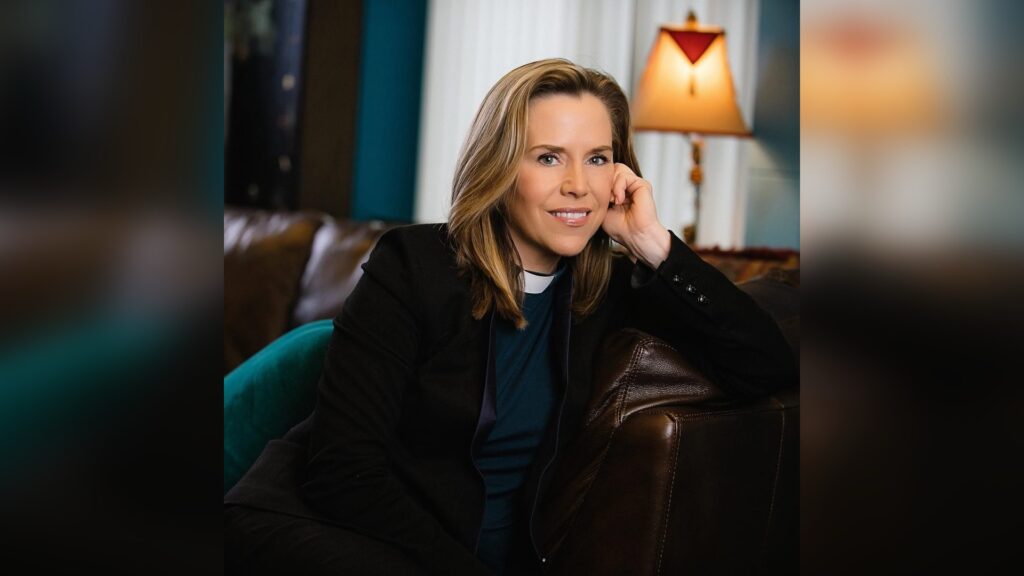
United Church of Christ (UCC) leader Lillian Daniel recently confessed to being a member of the “bad pastors’ club.”
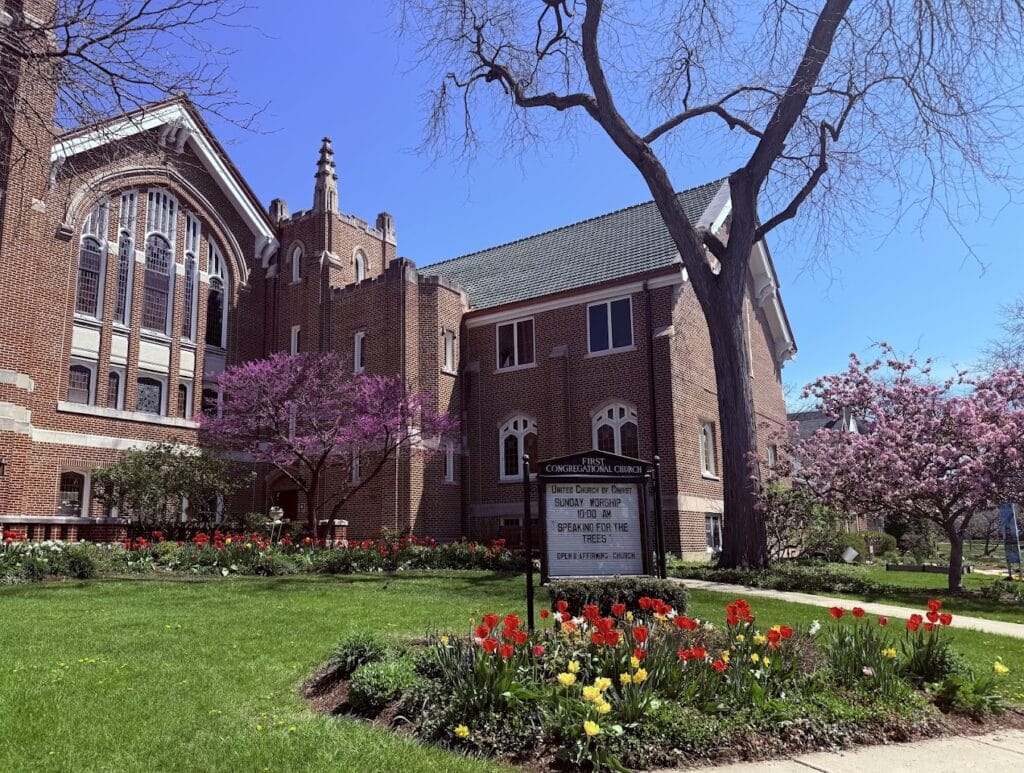
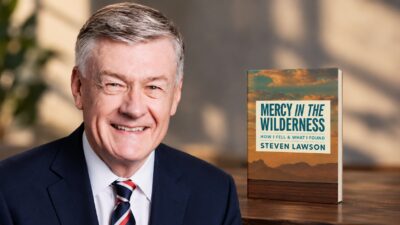
This summer, she published “Defrocked,” a 200-page book in which she admits to an “inappropriate sexual relationship” with a church employee when she pastored in suburban Chicago. In 2015, Daniel lost her job at First Congregational Church of Glen Ellyn, but eventually rebounded to pastor a church in Iowa. She now holds the UCC’s top post in Michigan, serving as conference minister over 350 pastors.
But 143 fellow UCC pastors — many prominent leaders themselves —believe her confession hasn’t gone far enough. They signed their names to a letter calling for accountability. Daniel abused her power then and now, they allege, by publishing a book in which she plays the victim of the church’s accountability system.
In a 1,600-word “letter of concern” to top leaders of the progressive denomination, these clergy state, “Of greatest concern is the re-traumatization not only of Daniel’s victims, but anyone harmed by the sins of the church.”
The book, they say, “ignores the long and painful history of clergy sexual abuse which has transgressed so many boundaries held in sacred trust by clergy.”
Your tax-deductible gift supports our mission of reporting the truth and restoring the church. Donate $50 or more to The Roys Report, and you can elect to receive our featured offer, “When Shepherds Prey: Confronting Abuse in Church Leadership—A Call for Reformation” by Ron Cantor. – click here.
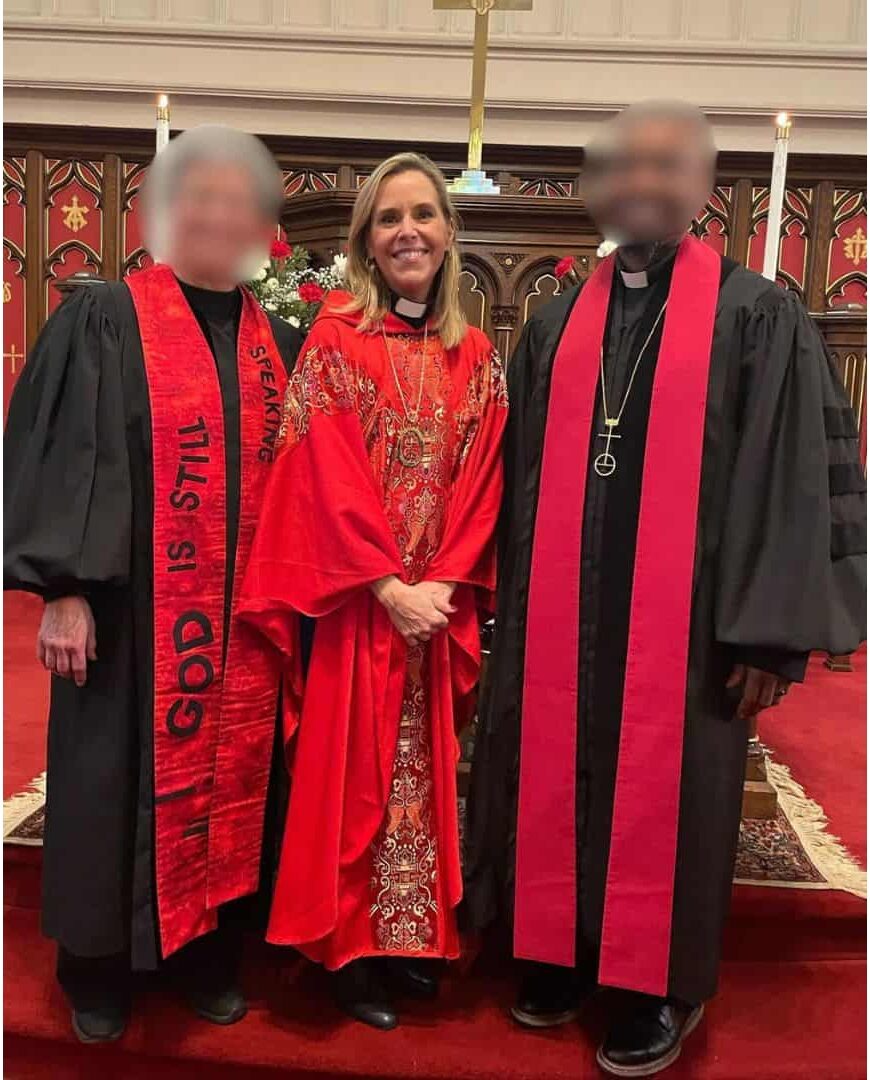
Signees include influential New York UCC pastor Ann Kansfield; Laura Everett, executive director of the Massachusetts Council of Churches; and Kerri Parker, executive director of the Wisconsin Council of Churches.
The signees call for a formal review of Daniel’s “misuse and abuse of power, crossing of boundaries, and disregard for covenantal relationships.”
The clergy letter was sent on Sept. 15 to UCC President Karen Georgia Thompson and Darrell Goodwin, chair of the Council of Conference Ministers. It was also sent to Elizabeth Dilley, head of UCC’s Ministerial Excellence, Support and Authorization team, as well as Diane Baker, moderator of the board for UCC’s Michigan Conference.
It’s unclear from the clergy letter whether any of the four responded. Roys Report (RR) reached out to both the organizers for the clergy letter and the leaders it addressed but received no response.
RR also emailed Daniel, but she didn’t respond.
The book that almost never was
“Defrocked,” subtitled “Good News from a Bad Pastor for a Better Church,” almost didn’t get published. The original publisher, Westminster John Knox (WJK) Books, an imprint of Presbyterian Publishing Corporation, planned to publish it April 7. Then it quietly withdrew.
The clergy letter said the publisher had unspecified concerns. WJK did not respond to a request for comment.
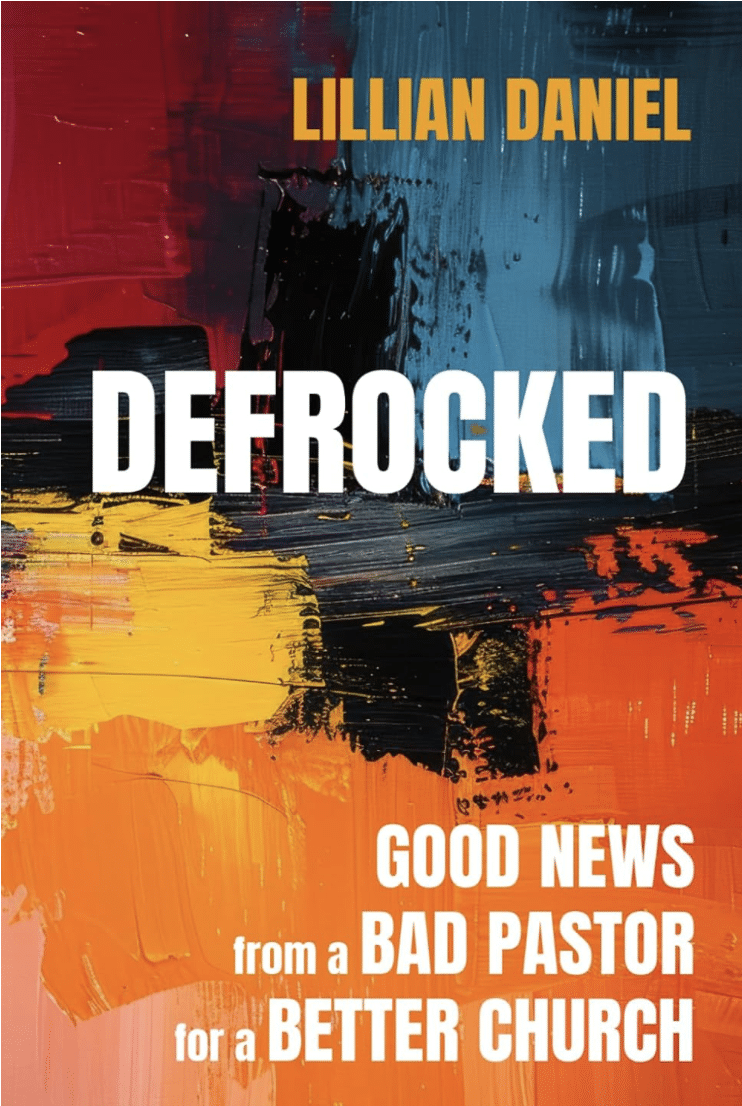
Daniel self-published her book, the clergy letter states. The book, released May 20, shows its publisher as Vilicus Press, an entity that appears to have no website.
Several prominent progressive Christians, including emergent church leader Brian McLaren and Otis Moss III, pastor of Chicago’s Trinity United Church of Christ, endorsed the book.
“Defrocked is a masterful account of agony standing next to amazing grace,” Moss wrote.
Since the book’s publication, it’s been the talk of “alarm” by UCC clergy, according to the clergy letter. Some have been afraid to speak publicly for fear of negative repercussions.
“Common themes include the manner in which it was published, its author’s position in the power structure of the church and the impact of its content,” the letter stated.
‘Life’s a ditch’
In fall 2013, Daniel was the senior pastor of about 1,400 people at First Congregational Church of Glen Ellyn and finalizing a divorce from her husband of 23 years. In that season, she had an inappropriate relationship with a church employee, she wrote in her book.
“I regretted it and I believe he regretted it too, and I thought we had parted on decent terms,” she wrote.
Instead, the church employee reported her sexual misconduct to the UCC, she wrote, and the UCC launched a ministerial fitness review in March 2015.
“But now, eighteen months later, (the employee) had chosen to bring these charges at this moment, days before Holy Week,” she wrote. Consequently, Daniel was removed from her church and placed on a 40-day administrative leave during a pastor’s busiest week in the Christian calendar.
In her book, Daniel often describes her failings, shame and regret. She compared herself to the man in the ditch who needed rescuing by the Good Samaritan.
“This book is the story of how I came to understand that life’s a ditch,” she wrote in the introduction. “And then, by the grace of God, you live.”
‘Pattern of boundary violations’
The UCC formed a tribunal, whose members she doesn’t name and whose membership later changed without her prior knowledge. She wrote that this tribunal prohibited her from talking to her congregation or staff.
She wrote of “forced silences, each one shaming me into surrendering my narrative to an ecclesial process that would hold it captive.”
The tribunal told her some information about the charges, such as the alleged victim’s name and the certain sections of the ordained ministers’ code. But Daniel wrote that the tribunal wouldn’t share with her the full complaint from the alleged victim, nor give her a physical copy to take home.
Trying to be transparent with the UCC’s investigator, Daniel wrote that she confessed not only to sexual misconduct with her church employee but to other unspecified mistakes.
“I narrated a list of everything I thought was wrong with me, a rambling confessional of my every shortcoming in ministry and my family life, including my most intimate failures in my marriage,” she wrote.
As a result of Daniel’s additional confessions, the UCC suspended her for three months, pointing to a “pattern of boundary violations,” Daniel wrote. She calls these “private failings” as “none of their business” and lobbed the “pattern” accusation back at the UCC.
“If there is a ‘pattern’ to be discovered here, it is this tribunal’s pattern of confusing the process, constantly changing the rules,” she wrote.
She added that the UCC’s pattern also included “holding meetings from medieval times,” referring to the UCC not giving her a physical copy of the charges.
She initially “trusted the process,” she wrote, but she grew disillusioned as her denomination’s pendulum swung “to the side of caution.”
She also saw a big difference between predatory pastors and the non-predatory mistake-makers. She identified herself as in the second group.
“I remember being surprised to hear myself telling them that I was not a serial predator or a danger to others, amazed that these were now important points I had to argue,” she wrote.
Her Chicago church didn’t believe she’d done enough and forced her resignation, she wrote. She didn’t lose her ordination, so within months, the First Congregational Church in Dubuque, Iowa, offered her a position as senior pastor. She pastored there from 2016 to 2022. She was then promoted to be the conference minister at Michigan’s UCC branch.
Not ‘trauma-informed’
The clergy letter states that Daniel was accused of more than one “sexual ethics boundary violation.”
“It is important to note that Daniel would not have been eligible for rehire in many work places, but now holds a position of significant power in ours,” the letter reads. “Daniel does not express repentance in a believable way, but with shock that she is indeed being held accountable for her wrongdoing.”
Additionally, the signatories wrote, “Her recounting of events fails to meet the guidelines for trauma-informed care.”
Specifically, she focused on her own suffering, rather than that of the victim, the clergy wrote.
“This book centers the author as a victim of the process, and in doing so deepens harm by the diminishment of the experience of actual victims of the harm done by the author,” they wrote.
Though Daniel pointed out the tribunal’s alleged errors, she didn’t offer any ideas for reforming the accountability process, the clergy letter stated. This is particularly troubling, they wrote, since she’s now responsible for pastoral accountability in Michigan.
“It is deeply important that we take seriously this process that is imperfect yet essential, deeply nuanced,” they wrote, “and returns the power to the people of the church.”
 Rebecca Hopkins is a journalist based in Colorado.





10 Responses
I could say a bunch of very strident things here, such as commenting on the extremely inappropriate comparing of herself to the man tossed into the ditch, but perhaps I shall just pose the rhetorical question: “what if a male pastor had acted like she did, and then that same fellow were given a lofty denominational promotion?”
In the UCC, no one is “promoted,” rather the proper term is “called.” A search committee seeking a new Conference Minister in Michigan recommended her to be “called” as the Conference Minister. The Michigan Conference held a meeting where a vote was taken by those present to “Call Dr. Daniel” as Conference Minister. It is going to be interesting to see how this call to accountability is dealt with in the days ahead. There is a specific process outlined in the Manual on Ministry that leads to a Fitness Review for clergy who have violated the Ministerial Code of Ethics in the UCC.
Yes, it will be interesting to see how all this pans out in the context of a ministry review, best pastoral practice and ministry
codes of ethics. Interesting too how many embarrassments & careerists are often “called” elsewhere these days regardless of the religious body or denomination. 🤔
How do I book a boundary violation appt? Asking for a friend.
The UCC abandoned Christian sexual ethics long ago. This predatory behavior is just more rotten fruit.
I grew up in UCC. I agree with you.
This is not a defense of her or her actions at all- but I have yet to see any denomination or people within one go after this stridently a male pastor who has committed clergy sexual abuse and been “restored” to leadership.
I think she has forfeited her ability to be in christian leadership. I think ALLLLL the males who have done the same and been “restored” have *also* forfeited their ability to be in christian leadership. There is a profound double standard.
Well, if we’re going to look at it from that angle, do we have an equivalent scenario from which to make a comparison? A male Pastor who was subject to church discipline and then wrote a book about their experience in which they are the sympathetic protagonist?
I’m sure one exists, but first we would have to find one and then compare the reaction the book received.
The “church employee” she had the relationship with was a member in discernment, a fact that she conveniently left out, and one that makes herself playing the victim even more disgusting.
Must we call people ‘reverend’. Don’t we all know Him from the least of us to the greatest. If indeed we do know Him.