


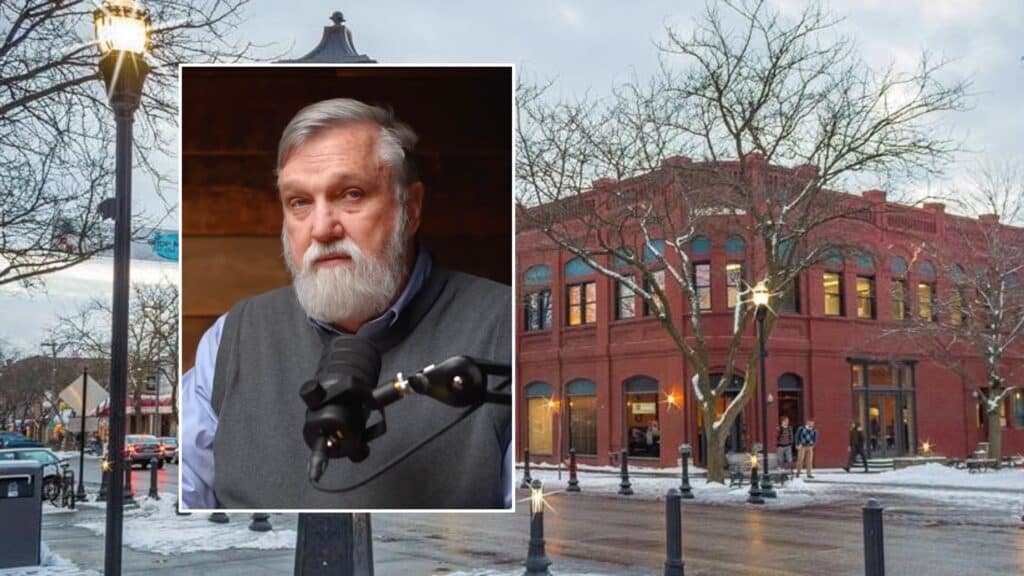
The Christian school founded by controversial Pastor Doug Wilson is suing Moscow, Idaho, for alleged religious discrimination.
The civil rights lawsuit filed Sept. 2 by New Saint Andrews College accuses the city of unequal enforcement of zoning rules. It says Moscow blocked the college from performing administrative work that ordinary businesses are allowed to do in the same downtown district.
The 24-page complaint also challenges parking requirements the college says apply to New Saint Andrews but no other downtown occupants.
New Saint Andrews is closely associated with Christ Church, the Moscow congregation Wilson leads. The college’s complaint calls the school a teaching ministry of the Communion of Reformed Evangelical Churches (CREC), the denomination Wilson co-founded.
Wilson is a founding board member, trustee and senior fellow of theology at New Saint Andrews. He has served as a pastor at Christ Church since 1977, according to the college.
Your tax-deductible gift supports our mission of reporting the truth and restoring the church. Donate $50 or more to The Roys Report, and you can elect to receive our featured offer, “When Shepherds Prey: Confronting Abuse in Church Leadership—A Call for Reformation” by Ron Cantor. – click here.
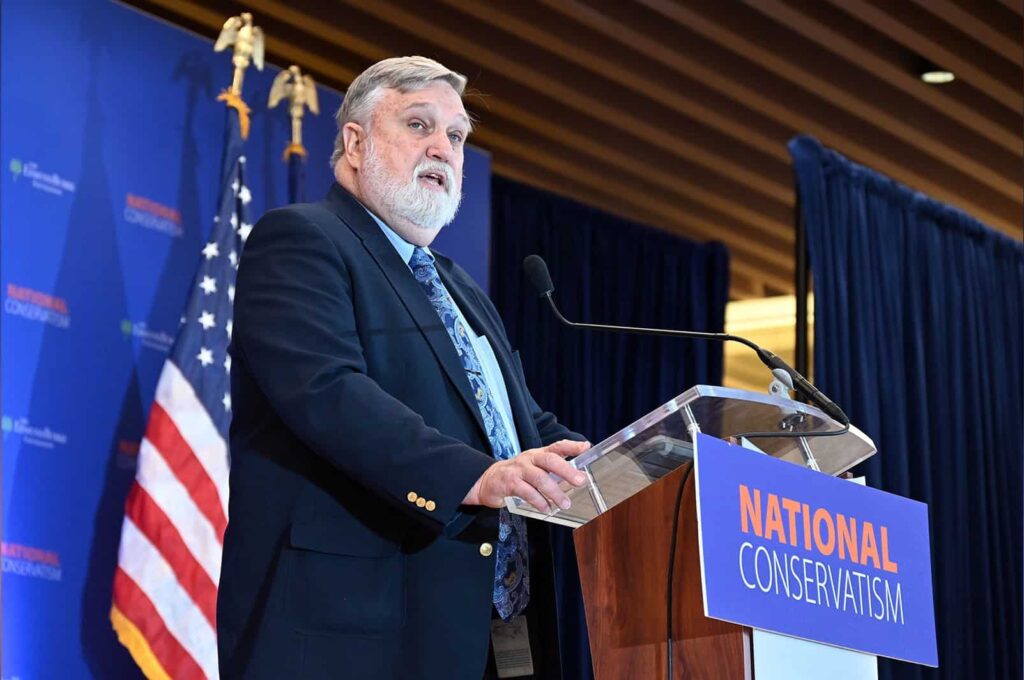
He has been widely identified in news coverage as a Christian nationalist. He told The Guardian this year that describing him as a Christian nationalist would be “fair.”
The Moscow lawsuit, however, focuses on land use and the college’s claim that city officials singled it out because of its religious identity.
New Saint Andrews alleges violations of the federal Religious Land Use and Institutionalized Persons Act, the First Amendment, Idaho religious-freedom law and the Idaho Constitution.
The college seeks declaratory and injunctive relief, compensatory and nominal damages, attorneys’ fees and costs. It also is demanding a jury trial.
At the center of the fight is The Pierian, a downtown building New Saint Andrews began renting in February 2024. The college planned an art gallery downstairs and administrative offices upstairs.
Moscow determined those offices constituted a prohibited college or university use in the Central Business zone, according to the complaint. New Saint Andrews says ordinary office work is otherwise permitted there.
The college points to written guidance from Deputy City Supervisor Cody Riddle in 2022. He told New Saint Andrews that “office use is permissible in the (Central Business) zone,” the complaint says.
A city zoning decision rejected the proposed office use in February 2024. A revised decision followed in March, and New Saint Andrews appealed.

The city’s Board of Adjustment voted 4-0 in June 2024 to reverse the zoning decision. City staff appealed the board’s ruling to the City Council.
On Sept. 3, 2024, the council unanimously reversed the board and reinstated the denial, according to the lawsuit. The complaint says the college was not allowed to comment during that proceeding.
Moscow eventually allowed the administrative work under a different arrangement, the lawsuit says. New Saint Andrews had to contract the services to a separate business and sublet the upstairs space.
The college sublet the second floor to Moscow Business Services. The city also required that company to serve at least one other client, according to the complaint.
New Saint Andrews says no comparable rule forces a downtown business to outsource its own administrative work.
The lawsuit also challenges parking conditions attached to permits for its campus buildings. The college says it must provide 89 spaces, including 47 within one-quarter mile of its North Campus location.
New Saint Andrews alleges it is the only Central Business Zone occupant required to provide off-street parking. The lawsuit says the city continues to monitor its compliance.
The complaint repeatedly contrasts Moscow’s treatment of New Saint Andrews with its treatment of the University of Idaho, a public institution.
It alleges the university operates offices, an art gallery and some medical-school activities in the Central Business zone without comparable restrictions.
New Saint Andrews also cites comments by Councilwoman Julia Parker as evidence of alleged religious hostility. She participated in the council’s unanimous 2024 vote against the college.
At an August 2025 live podcast event, Parker discussed making Moscow “a good, welcoming, kind community” while “we fight” “this Christian nationalist church,” according to the complaint.
The lawsuit describes the remark as evidence of anti-religious animus, an allegation that has not been adjudicated.
The complaint also alleges that several council members have connections to the University of Idaho, which caused unequal treatment of the two schools.
City Administrator Bill Belknap said in a Sept. 15 statement that Moscow learned of the lawsuit through a media organization’s request for comment.
He said the city had not been formally served but obtained the complaint through the federal court’s online system.
“The city is currently reviewing the complaint and the associated allegations,” Belknap said.
“As this matter is the subject of litigation, the city may be limited in what information can be shared until deemed appropriate by the city’s legal counsel,” he added.
New Saint Andrews asks the court to block Moscow from enforcing the downtown prohibition on college and university uses. It also wants the court to bar the challenged office and parking conditions.
Cooper & Kirk PLLC represents the college. Attorney Megan M. Wold signed the complaint.
Wilson’s movement has gained national attention through Defense Secretary Pete Hegseth. The Trump cabinet member attends a Tennessee church in the CREC network and has publicly aligned himself with the denomination, The Associated Press reported.
Hegseth invited Wilson to preach at the Pentagon in February, according to The Washington Post. The defense secretary has also publicly praised or amplified messages associated with Wilson’s religious network.
 Mark A. Kellner is a reporter based in Mesquite, Nevada. He most recently covered statewide elections for the New York Post and was for three years the Faith & Family Reporter for The Washington Times. Mark is a graduate of the University of the Cumberlands and also attended Boston University’s College of Communication.









14 Responses
City is clearly in deep on this one!
Yup, esp after the councilwoman opened up her trap. Whatever one thinks of Wilson, their school is not an illegal enterprise and it must not be subjected to conditions other entities in town are not required to obey, esp when the local authorities are self-evidently acting out of religious animus for them.
So the statement “founded by controversial Pastor Doug Wilson” is an opinion statement that reveals the reporter’s, Mark A. Kellner’s, bias against Doug Wilson. I am not saying I am a fan of Doug Wilson’s, just that I recognize the non-objective reporting by Mr. Kellner. Don’t want it; don’t need it.
But Doug Wilson IS a controversial figure. People’s strong diametrically opposed opinions of him make that a reportable fact as I see it.
What is biased? he is controversial. he is a pastor. and he founded the school. All of those are just facts.
I don’t like Doug Wilson or his dogma, including Christian Nationalism, at all. But if the facts as alleged are correct, then the city of Moscow has engaged in viewpoint discrimination in violation of the First Amendment and the Religious Land Use and Institutionalized Persons Act.
Now if the City of Idaho has to write a big check to settle this, it won’t be the bureaucrats and politicians who violated the law paying for their unlawful decisions personally. It will be the taxpayers of Moscow ponying up the money.
I think it would be a better comparison if they were comparing treatment of another private, for profit institution instead of a public institution.
But really, why should a government funded school be treated differently than one funded by the private sector? Do we really want governments discriminating against the private sector on behalf of government funded entities? We do have experience with what happens when that’s done; the private sector leaves town, and you end up with Gary or Detroit.
While I’m not a fan of Douglas Wilson New Saint Andrew’s is non profit
Relationships are two-way streets. The city may have violated the law, but this church hasn’t exactly endeared itself to the community, especially during the pandemic.
While that is no alibi for discrimination by government, believers are instructed to live in peace with all as best as is possible (Romans 12:18).
Not a big fan of Wilson’s, but it strikes me that what’s going on is that both NSA and U-Idaho are taking advantage of a largely vacant downtown area to get the buildings for a song, and the city is trying to put a lot of preconditions on NSA that may or may not be being applied to U-Idaho.
But let’s leave that aside. Historically, the upper floors of those buildings were used for office space and housing rentals, so denying this use today shows only that the city council would apparently prefer vacant lots to buildings being used–and taxed. That’s why they often have separate stairways to the second floor. Moscow wants, it would seem, Detroit with mountain views.
Unless, of course, the goal is to allow the U. of Idaho to buy the buildings from NSA for even less, NSA having paid to update and renovate them. So if indeed they are trying to require NSA to do things that U-Idaho is not required to do, it’ll be fun to watch the legal fur fly.
From this reporting it would seem that the town may not win this one. However, it is worth remembering that Church leaders have long described their objective as a “spiritual takeover” meant to make Moscow a “Christian town”, by which they actually mean a “company town”, which would worry me if I lived there. This is the context.
The city has eminent domain, and it’s going to be difficult for Wilson to prove this as discrimination in court. Just more of the same bluster and attention seeking we have come to expect from Wilson.
Gilbert, city codes and applications for variances are public documents, and I’d be surprised if Christ Church doesn’t already have them. I’d argue that legally speaking, it’s pretty much a slam dunk.