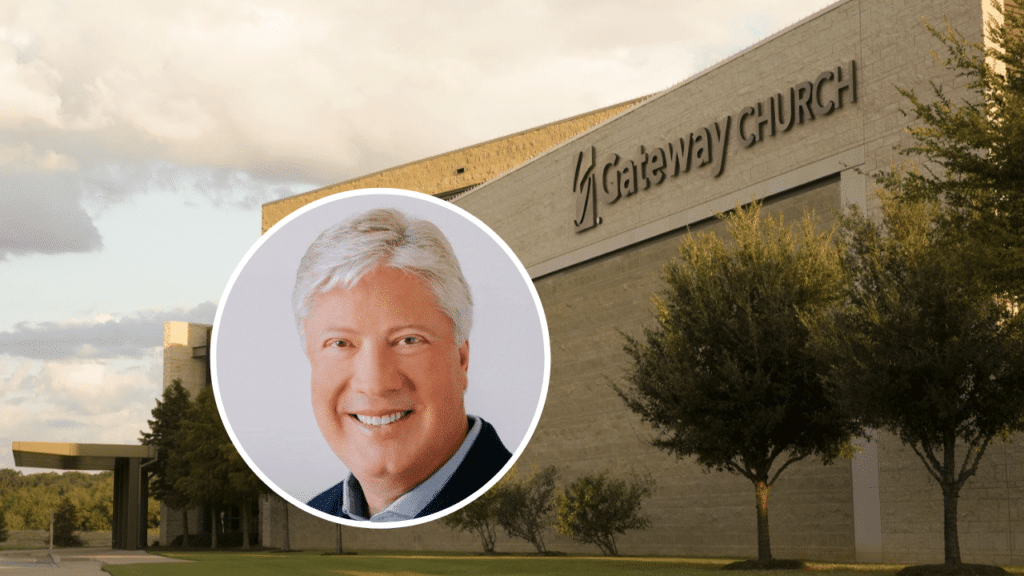
A Texas appeals court dismissed many of Cindy and Jerry Clemishire’s claims against Gateway Church and three elders Wednesday, ruling that the First Amendment bars judges from getting involved.
A companion ruling also dismissed most claims against former Gateway pastor Robert Morris and all claims against his wife, Deborah Morris.
The court cited the church-autonomy doctrine and state and federal court precedents protecting religious organizations from secular interference.
The appeals court is allowing claims against the Robert Morris Evangelistic Association to go forward, however.
The courts can hear the portions of the Clemishires’ lawsuit that are based on a May 30, 2025, affidavit, according to Wednesday’s ruling. The Fifth Court of Appeals in Dallas said the affidavit did not arise from Gateway’s investigation or its communications about that investigation and so is not protected by church autonomy.
Your tax-deductible gift supports our mission of reporting the truth and restoring the church. Donate $50 or more to The Roys Report, and you can elect to receive our featured offer, “When Shepherds Prey: Confronting Abuse in Church Leadership—A Call for Reformation” by Ron Cantor. – click here.

Morris also argued the claims based on the affidavit should be excluded under the judicial-proceedings privilege. The appeals court did not rule on that argument, but said his attorneys may make that case to the trial court.
The Robert Morris Evangelistic Association is accused of civil conspiracy and intentional infliction of emotional distress.
All remaining claims against Robert and Deborah Morris are dismissed. The claims against Gateway elders John D. Willbanks, Kenneth Fambro and Dane Minor are also dismissed.
No role for secular court
The Fifth Court of Appeals invoked the “ecclesiastical abstention” doctrine, also called the “church autonomy” or “religious autonomy” doctrine.
The court said the doctrine deprived the trial court of jurisdiction over claims “inextricably intertwined” with Gateway’s investigation of allegations against Morris.
Justice Mike Lee wrote both opinions for a three-judge panel that included Justices Emily Miskel and Nancy Kennedy.
Bill Mateja, Morris’ attorney, applauded the ruling. In an email to Roys Report (RR), he said the lawsuit “was an attempt to pull a church’s internal reckoning into a courtroom where it doesn’t belong.”
Mateja added that “the Court of Appeals confirmed that the First Amendment doesn’t allow it.”
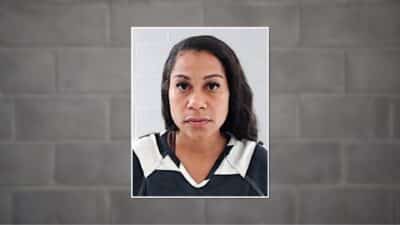
The case arose after Cindy Clemishire accused Morris of sexually abusing her from 1982 through 1987, beginning when she was 12.

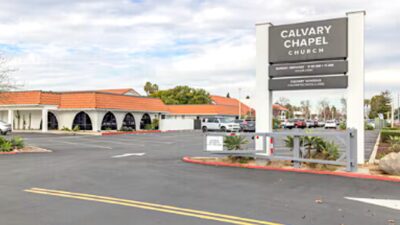
Morris was a pastor at Shady Grove Church at that time. He founded Gateway in 2000. In June 2024, when the allegations were made public, Gateway sent employees a statement addressing the claims and the church’s understanding of Morris’ past conduct.
Portions later circulated on social media and were reported by news organizations.
Morris resigned June 18, 2024. Last October, he pleaded guilty to sexually abusing Clemishire.
Morris served six months’ imprisonment, accepting a plea deal that suspended the balance of a 10-year sentence. He must register as a sex offender and pay $270,000 in restitution.
Statement called Clemishire ‘young lady’
Gateway subsequently confirmed Clemishire’s allegations and acknowledged its June 14 statement was misleading.
The church said elders previously understood Morris’ conduct involved an extramarital relationship with “a young lady” rather than “abuse of a 12-year-old child.”
Clemishire and her father Jerry sued, accusing church leaders of defamation, civil conspiracy and intentional infliction of emotional distress.
The appeals court did not determine whether Gateway’s statements were defamatory.
Instead, it held that determining what Gateway’s leaders knew, and how they reached their conclusions, would require a civil court to probe internal church deliberations.
“The First Amendment prohibits courts from interfering with a church’s management of its internal affairs,” the court said, citing Texas Supreme Court precedent.
State and federal precedents
The doctrine also has deep roots in U.S. Supreme Court decisions protecting religious organizations from government intrusion into ecclesiastical governance.
In Kedroff v. St. Nicholas Cathedral in 1952, the Supreme Court recognized church independence in matters of faith, doctrine and internal government as constitutionally protected.
The court strengthened that principle in Serbian Eastern Orthodox Diocese v. Milivojevich in 1976.
In that case, the justices rejected the idea that a civil court could review decisions involving church discipline and governance.
The 2012 case Hosanna-Tabor Evangelical Lutheran Church and School v. EEOC established a constitutionally required “ministerial exception” to certain laws. The Supreme Court unanimously held that the First Amendment limits government interference with a religious organization’s choice of ministers.
The Gateway court cited Justice Samuel Alito’s Hosanna-Tabor concurrence for the proposition that investigations concerning church leaders’ “character and conduct” are “inherently ecclesiastical.”
The Dallas court relied most heavily on the Texas Supreme Court’s 2021 ruling, In re Diocese of Lubbock.
That case barred defamation and emotional-distress claims arising from a Catholic diocese’s investigation of sexual-misconduct allegations against a deacon.
The Dallas court concluded the same principle protects Gateway, although Gateway is independent and governed by elders rather than bishops in a hierarchical denomination.
“A church governed by a Board of Elders is entitled to the same constitutional protection as is a church governed by a robust code of canon law,” Lee wrote.
In a separate concurrence, Lee said that the Texas Constitution “provides even broader protection to ecclesiastical bodies than is provided by the First Amendment.”
Gateway attorney Ron Breaux said the First Amendment prevents secular courts from judging how churches investigate clergy, govern themselves or communicate about religious leaders’ character and conduct.
The court was not asked to look at Clemishire’s abuse itself, he said.
“Nothing about this decision diminishes what happened to her,” Breaux said. The Clemishires “did not sue Gateway over the tragic abuse itself, but over the Church’s statements about Robert’s misconduct. Those statements were made by a Church seeking to shepherd its congregation and, as the Court held, are therefore protected by the First Amendment.”
Mateja, similarly, separated the jurisdictional question from his client’s actions.
“Robert has never shied away from what he did to Cindy decades ago — he pled guilty,” he told RR, “and he served the sentence for it.”
 Mark A. Kellner is a reporter based in Mesquite, Nevada. He most recently covered statewide elections for the New York Post and was for three years the Faith & Family Reporter for The Washington Times. Mark is a graduate of the University of the Cumberlands and also attended Boston University’s College of Communication.